Mahashivratri, which literally means “The Great Night of Shiva,” is one of the most sacred and widely celebrated festivals in Bhavnagar and across India. Observed in honor of Lord Shiva, it typically falls in the Hindu month of Phalguna or Magha (February–March), marking a night of devotion, fasting, and spiritual reflection. In Bhavnagar, the festival comes alive at temples such as the Takhteshwar Temple and Nishkalank Mahadev Temple, where devotees from the city and surrounding villages gather in large numbers to participate in religious rituals.
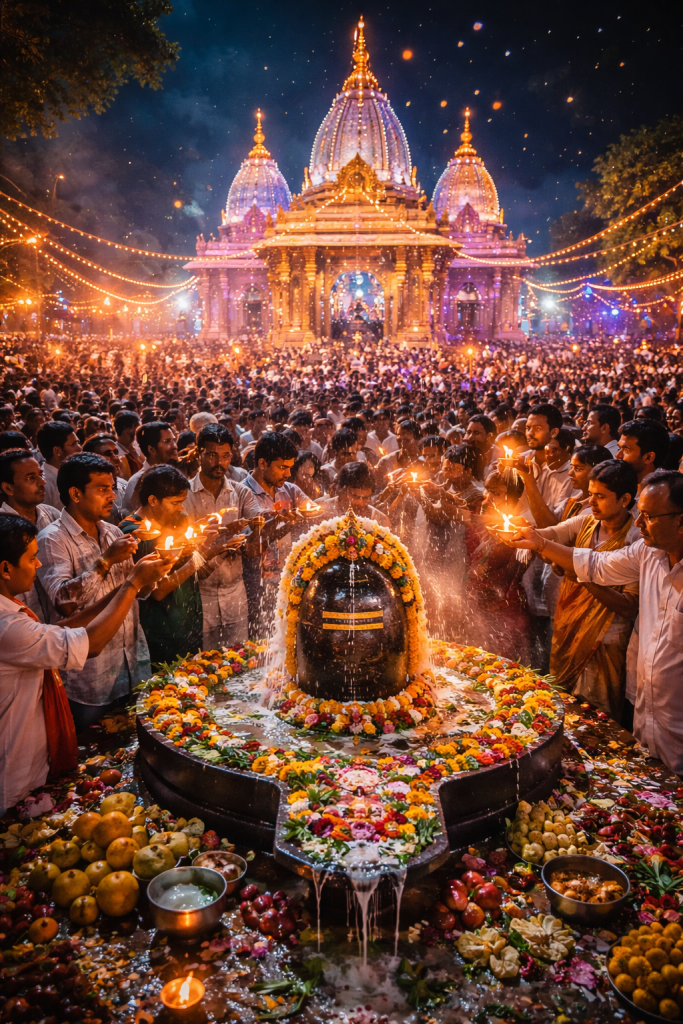
On this auspicious night, devotees perform Jagran—an all-night vigil filled with devotional songs, chants, and prayers dedicated to Lord Shiva. Temples are beautifully decorated with flowers, lights, and marigold garlands, creating a serene yet vibrant atmosphere. People offer bel leaves, fruits, milk, and water to the Shiva Lingam, believing that such acts bring spiritual purification, prosperity, and fulfillment of wishes.
The festival is not just about rituals; it embodies deep cultural and spiritual significance. It symbolizes the overcoming of darkness and ignorance through devotion and self-discipline. Many devotees observe fasting throughout the day and night, breaking it only after offering prayers during the early hours of the morning. In Bhavnagar, local communities also organize processions, storytelling sessions about Lord Shiva’s legends, and community gatherings, making Mahashivratri a blend of devotion, culture, and social harmony.
Mahashivratri in Bhavnagar is a visually captivating and spiritually enriching experience. The temple premises glow under countless oil lamps, the air resonates with mantras and hymns, and the night is filled with a sense of calm, reflection, and reverence. It is a festival that not only strengthens faith but also brings the community together, fostering unity and shared devotion.